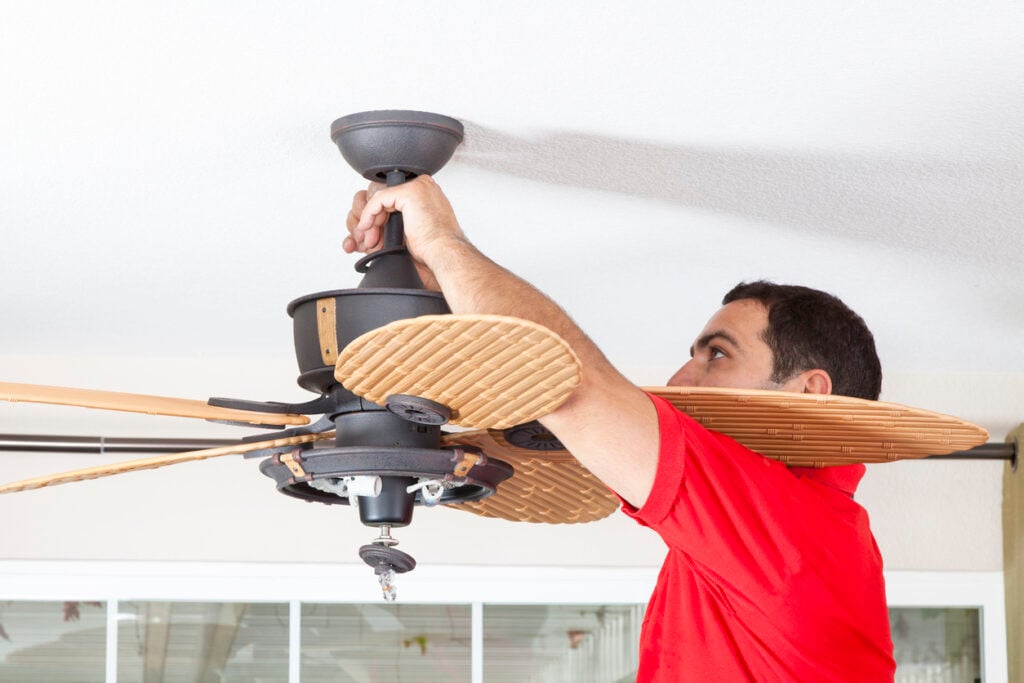
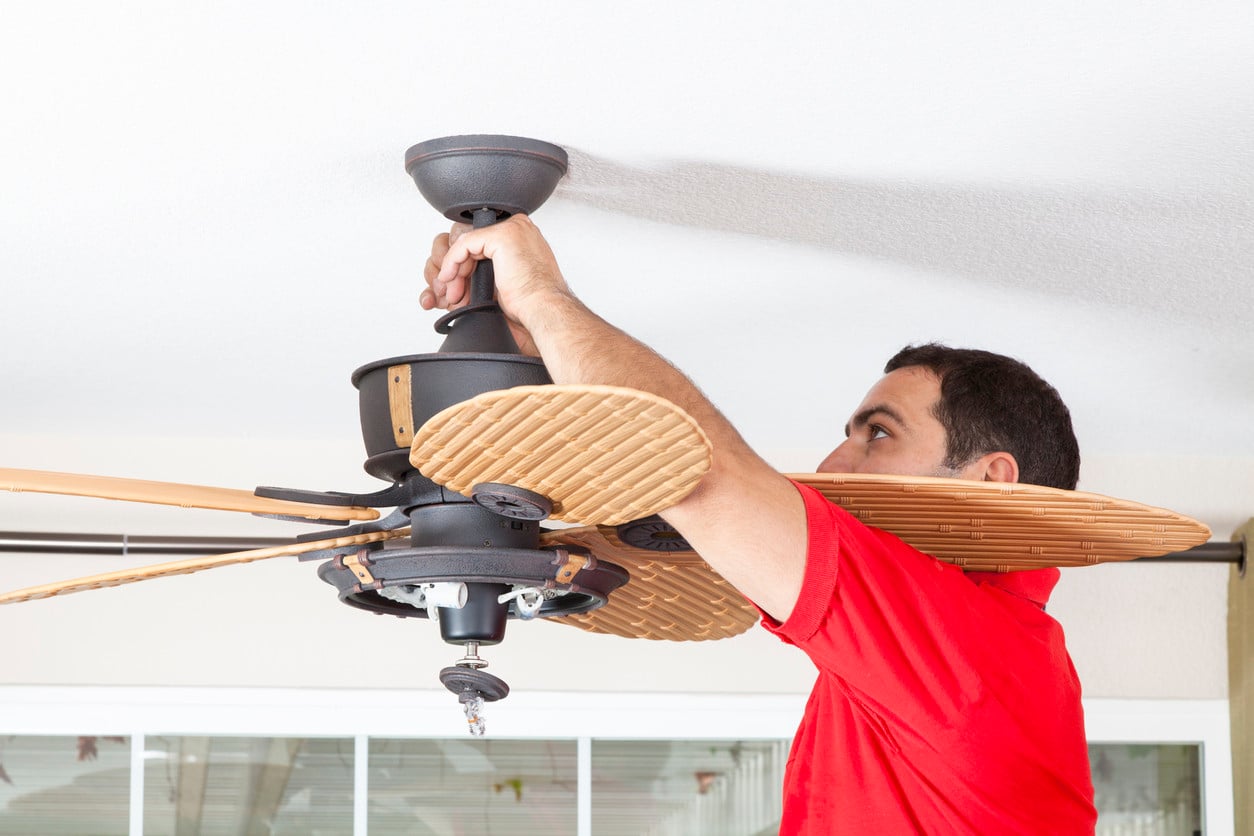
Kansas City residents know all too well that the local weather is nothing short of a rollercoaster. From sweltering, humid August afternoons to unexpectedly warm spring days, keeping your home comfortable requires strategy. While your HVAC system handles the heavy lifting, relying solely on air conditioning can cause your monthly utility bills to skyrocket. This is where a strategically placed overhead fan becomes an absolute game-changer for your property.
Adding an overhead cooling fixture to your living room, bedroom, or outdoor patio not only elevates your comfort but also significantly improves your home’s energy efficiency. However, mounting these heavy fixtures is rarely as simple as swapping out a lightbulb. It requires a clear understanding of structural support, complex wiring, and local building standards.
In this comprehensive guide, we are breaking down everything you need to know about setting up a new fan in the KC metro area, from the hidden dangers of do-it-yourself projects to understanding the true costs. If you want peace of mind, Fusion Electric is here to help ensure your home improvement projects are completed safely and securely.
Book Your Professional Fan Setup Today
The Midwest Climate: Why Overhead Fans Matter in KC
Before diving into the mechanics of mounting your new fixture, it is vital to understand why these additions are so beneficial for homes in the Midwest. A properly sized fan does not actually lower the temperature of a room; instead, it creates a wind-chill effect. By circulating conditioned air, the breeze evaporates moisture from your skin, making you feel up to four degrees cooler.
This simple physics trick means you can raise your thermostat by a few degrees during a KC heatwave without sacrificing your comfort. Over the course of a long, humid summer, this minor adjustment translates to massive savings on your utility bills.
Furthermore, fans are not just for summer. Most modern units feature a reversible motor. By switching the blade direction to rotate clockwise during our freezing Midwestern winters, the fan will push trapped warm air down from the ceiling, keeping your living spaces cozy and reducing the strain on your heating system.
Assessing Your Space: Room by Room Guide
Not every fan fits every room. Choosing the right unit is the first critical step before you even think about wiring or mounting brackets.
- Standard Living Rooms and Bedrooms – For rooms with standard eight-to-nine-foot ceilings, flush-mount or “hugger” fans are ideal. They sit close to the drywall, ensuring there is plenty of clearance for taller individuals walking underneath.
- Great Rooms and High Ceilings – Many modern homes in the suburbs feature vaulted or two-story great rooms. For these massive spaces, you need a fan with a larger blade span (typically 52 to 72 inches) and a downrod extension. The downrod drops the unit to the optimal height—usually eight to nine feet off the floor—so you actually feel the airflow.
- Outdoor Patios and Sunrooms – Kansas City summers are meant to be enjoyed outdoors, but the humidity can be stifling. If you are adding a fixture to a covered deck or pergola, you must purchase a “damp-rated” or “wet-rated” unit. Standard indoor models will warp, rust, and eventually fail due to motor short-circuits if exposed to the humid Midwest air.
Need Advice on the Right Fixture? Contact Fusion Electric!
The Hidden Dangers of DIY Fan Mounting
In the era of online video tutorials, it is tempting to tackle home improvement tasks yourself. However, dealing with heavy, spinning fixtures suspended over your family’s heads introduces a unique set of hazards. Attempting this project without the proper experience can lead to disastrous consequences.
Structural Failures and Drop Risks
The most common mistake ambitious homeowners make is attaching a heavy, vibrating motor to a standard light fixture junction box. Standard boxes are only designed to hold static weights (like a basic chandelier or dome light), usually up to 35 pounds or less. They are not rated to handle the dynamic, moving weight of a spinning motor. If you mount a fan to an unapproved box, the vibrations will eventually strip the screws or tear the box entirely out of the drywall, causing the fixture to crash to the floor. To do this correctly, a specialized, heavy-duty brace must be securely anchored directly into the overhead joists.
Wiring Hazards and Fire Risks
Working with your home’s power supply is inherently dangerous. Older homes in neighborhoods like Brookside or Waldo may have outdated wiring, lack proper grounding, or feature unpredictable circuit layouts. Misidentifying the hot, neutral, or ground wires can result in blown breakers, melted switches, or worse—a catastrophic house fire. Proper wiring ensures not only that the motor spins, but that the remote controls, wall switches, and integrated lighting function flawlessly without overloading the circuit.
The Infamous Wobble
Even if the unit does not fall and the wiring is perfect, an improperly balanced fixture will wobble violently on high speeds. This wobble causes annoying ticking sounds, accelerates wear and tear on the motor bearings, and creates an unsettling environment. Professionals use precise balancing kits and ensure the mounting bracket is perfectly flush to guarantee a whisper-quiet, smooth operation.
Project Scope & Setup Complexity Guide
Planning for this project depends entirely on your home’s current layout. Are you replacing an existing fixture, or do you need a completely new wire run to the center of a room?
To help you plan your timeline and understand the work involved, we have broken down the setup requirements for homes in the metro area:
| Project Type | Work Required | Estimated Labor Time | Key Structural & Wiring Requirements | Technical Risk Level |
| Simple Replacement | Swapping an existing, functional fan with a new unit of similar size. | 1 to 2 Hours | Reuses existing dynamic-rated junction box and standard wiring. | Low |
| Light-to-Fan Upgrade | Removing a standard light fixture and installing a fan. | 2 to 3 Hours | Requires removing old box and retrofitting a heavy-duty joist brace. | Moderate |
| Brand-New Setup | Installing a fan in a ceiling with no prior light or fixture. | 3 to 5 Hours | Cutting drywall, running new electrical wiring to breaker, adding switches. | High |
| Vaulted / High Ceilings | Any installation on ceilings exceeding 10–12 feet in height. | Adds 1 to 2 Hours | Specialized downrods, tall ladders/scaffolding, custom angle mounts. | High |
Making the Choice: DIY vs. Hiring a Professional
When deciding whether to grab your toolbelt or pick up the phone, honesty about your skill level is crucial.
When DIY Might Be Okay:
If you have extensive experience working with circuitry, you possess a voltage tester, and you are simply swapping out an old, ugly fan for a brand new one using a pre-existing, correctly rated junction box, you might be able to handle the project on a Saturday afternoon.
When to Call a Professional:
You should immediately consult a certified technician if:
- You are replacing a standard light fixture and need to install a heavy-duty joist brace.
- The room has absolutely no overhead lighting, meaning brand-new wires must be fished behind drywall.
- Your home is older (built before 1980) and features outdated wiring that requires careful handling.
- Your ceilings are vaulted, slanted, or higher than ten feet.
- You want to split the controls so the light and the fan operate on two separate wall switches rather than pull-chains.
By relying on an expert, you skip the frustration of balancing blades, the danger of working on tall ladders, and the anxiety of wondering if the fixture is securely anchored. Furthermore, professionals ensure that all work is up to modern building codes, keeping your property safe and legally compliant.
Why Fusion Electric is Your Go-To Resource
For years, homeowners across the metro have trusted our team to handle their most complex home improvement and wiring projects. At Fusion Electric, we believe in doing the job right the first time. Our experienced technicians understand the unique architecture of local homes and come fully equipped with the right tools, braces, and diagnostic equipment to ensure a flawless setup.
We actively try to avoid using generic industry terms and focus strictly on top-tier service. If you are looking for highly rated professional overhead fan setups, you do not need to look any further. We pride ourselves on punctuality, transparent pricing, and leaving your home cleaner than we found it.
Frequently Asked Questions (FAQ)
1. How long does it take a professional to mount a new unit?
If a heavy-duty, rated junction box is already in place, a trained technician can usually assemble, mount, and balance the new fixture in about one to two hours. If we need to replace a standard light box with a reinforced brace, or if we need to run entirely new wiring through the drywall, the project can take anywhere from three to five hours per room.
2. Can I just use the existing wiring from my old chandelier?
You can use the existing wiring, but you usually cannot use the existing mounting box. Standard light fixtures do not generate motion. The junction boxes holding them are nailed into the wood in a way that supports static weight. A spinning motor creates dynamic torque that will rip a standard box out of the ceiling. A professional will upgrade the box to a specialized fan brace before using the existing wires to power the new unit.
3. Do I need a special permit for this type of work in the metro area?
If you are simply swapping an existing fixture using the current wiring, a permit is typically not required. However, if the project involves running brand-new circuits to your main breaker panel or significantly altering the home’s infrastructure, local municipal codes generally require a permit. When you work with an experienced team like Fusion Electric, we handle all the code compliance and permitting guidelines for you, ensuring a stress-free process.
Conclusion: Stay Cool and Safe
Upgrading your home with overhead cooling fixtures is one of the smartest investments you can make for both your daily comfort and your long-term utility expenses. The soothing breeze of a perfectly balanced, whisper-quiet fan transforms a stuffy bedroom into a relaxing oasis. However, to enjoy those benefits without the worry of wobbling, electrical faults, or structural damage, the setup must be executed flawlessly.
Don’t risk your home’s safety on a weekend DIY gamble. Let the seasoned experts handle the heavy lifting, wiring, and balancing so you can simply sit back, flip the switch, and enjoy the breeze.
Ready to transform your living spaces?
Schedule Your Professional Service with Fusion Electric Today!